
Digital services cause CO2 emissions. Online website carbon calculators do not provide meaningful insights into a website's carbon footprint.
Indaru Ecometrics provides a website plugin to measure CO2 emissions. How does it work, and can it provide more accurate insights?
Background: where do website carbon emissions come from?
Internet CO2 emissions come from one of three sources:
- Data centers (where websites are hosted)
- Networking infrastructure (e.g. mobile networks)
- End user devices (e.g. phones, laptops, TV screens)
For each of these, there's a mix of embodied emissions caused by manufacturing the hardware and operational emissions due to electricity consumption.
It's difficult to provide an overall estimate of the amount of emissions caused by the internet. Most studies also look at the ICT sector as a whole, rather than just websites. It's tricky to say how training an AI model relates to emissions from web browsing.
Trying to break down emissions contributions to specific websites or individual page visits is even harder.
This review estimates that the ICT sector accounts for between 1.5% and 4% of total greenhouse gas emissions.
Caveat: it's from 2023 and the data these studies rely on is often even older.
Indaru Ecometrics
Indaru aims to report the carbon footprints of ads and websites. I don't know anything about how their full service works, but they include a plugin on their website that provides an emissions estimate for each page view.

Online website carbon calculators are based on page weight and the emissions intensity of the electricity grid. A website plugin has access to three additional pieces of data:
- How long did the visitor stay on the page?
- What device is the visitor using?
- Where is the visitor located?
That means the estimate increases over time. For example, here's the same page after it's been open for a few hours:

How does the plugin calculate emissions?
If we check the network requests in Chrome DevTools, we find that the plugin makes a request to a server with the website URL and device type, and gets back two calculation factors and a country code.
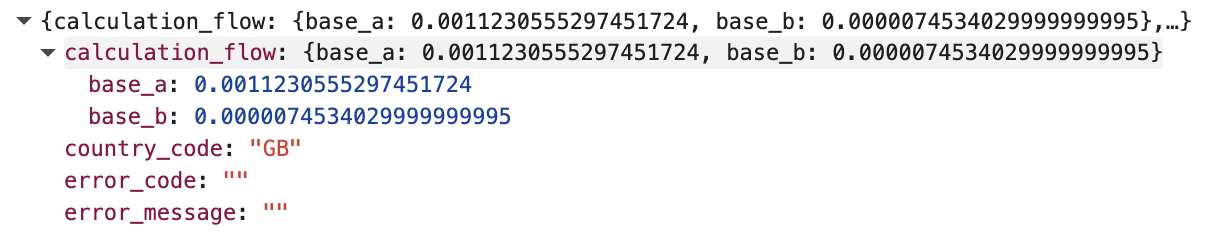
The client-side script then uses this formula to calculate the emissions estimate:
- The first factor is fixed for the page view
- The second factor depends on how long the page has been open
base_a + base_b * t
The time-dependent factor
What does the end user device emissions calculation depend on? I enabled mobile emulation and used a VPN to collect a measurement from three different locations.
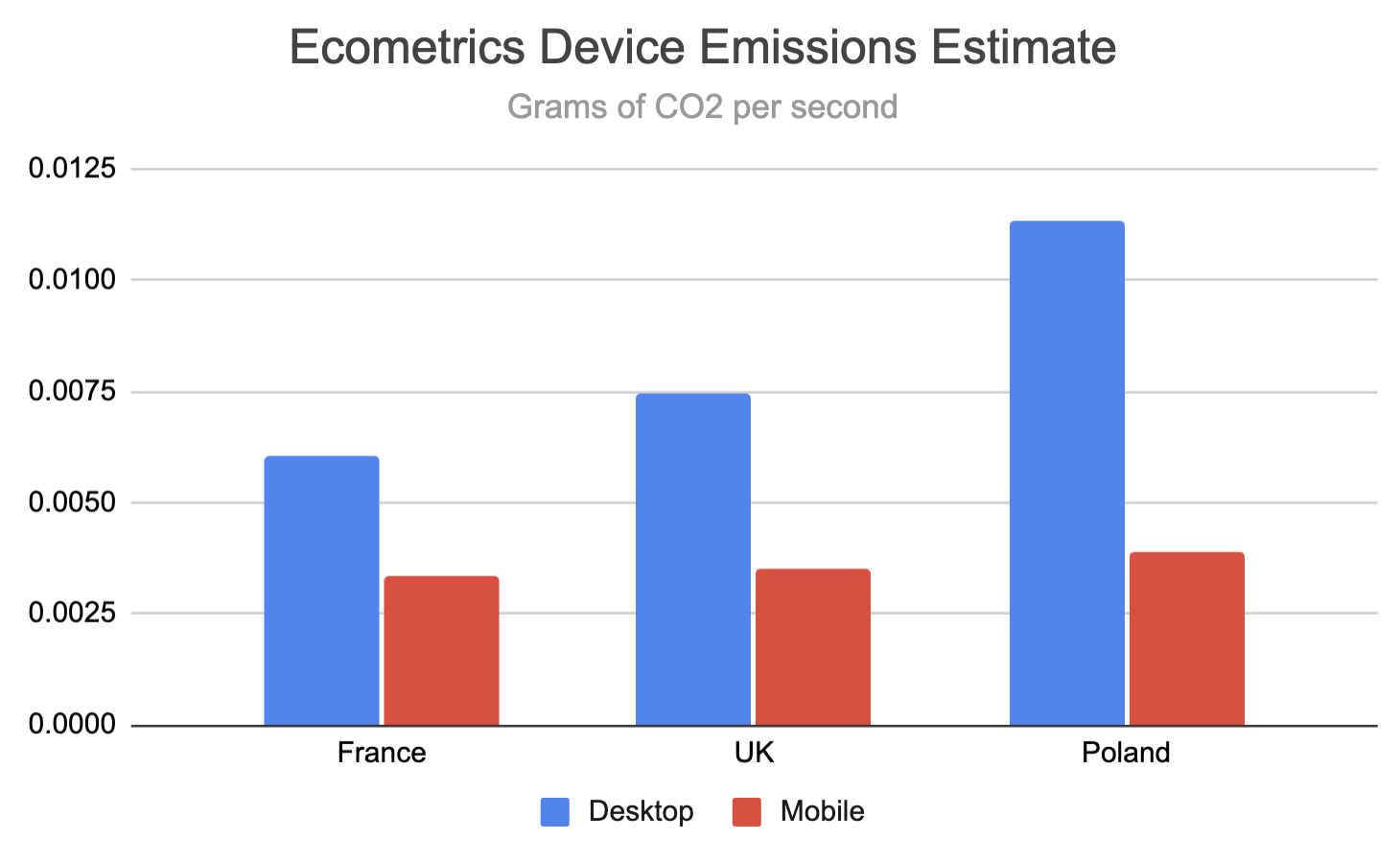
On desktop, the estimates vary significantly by country: when visiting the page from Poland, the reported emissions are almost twice as high as when opening the page from France.
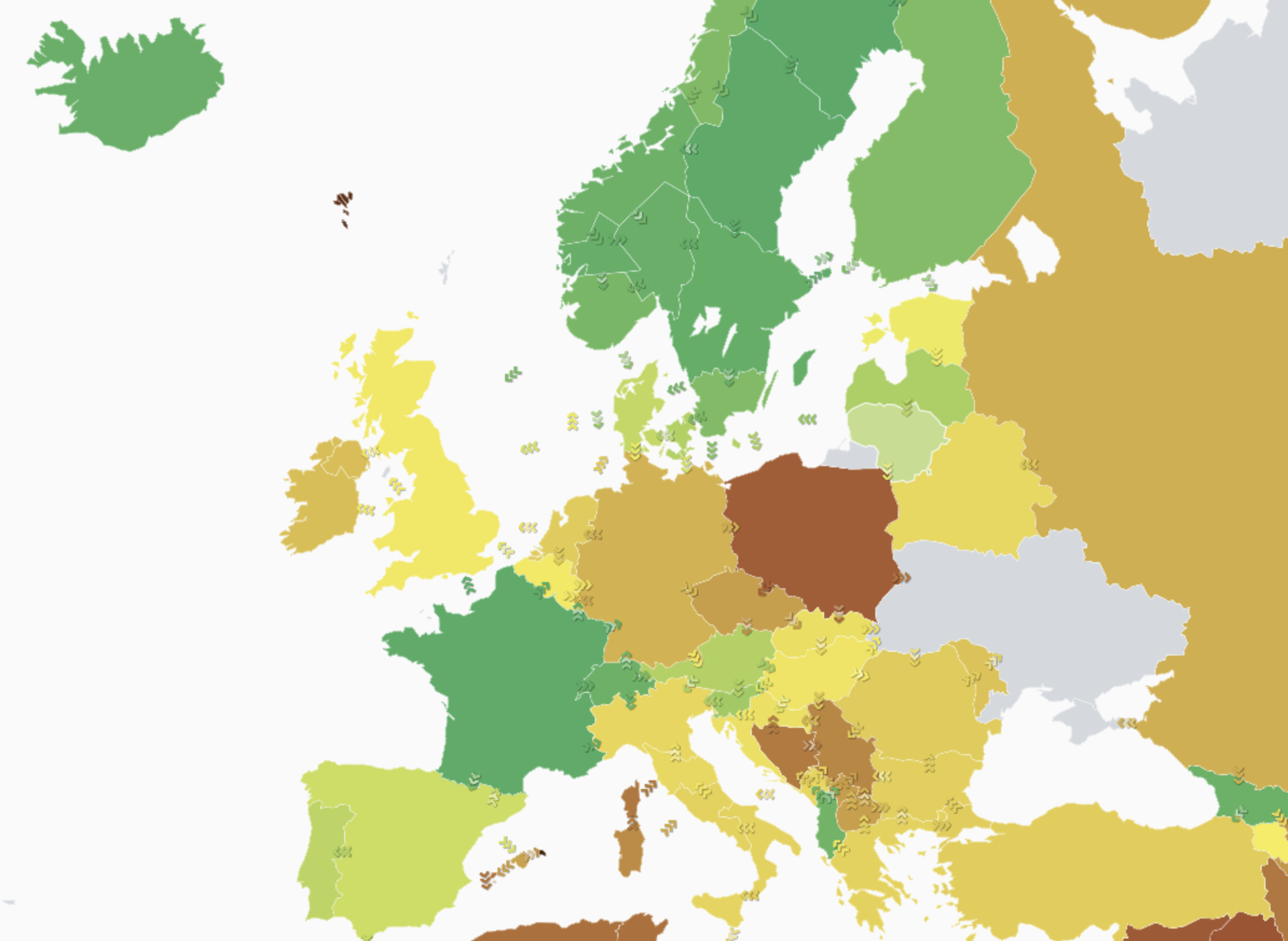
That's because the French electricity grid mostly uses nuclear power, while the Polish grid relies heavily on coal. Check out this screenshot from Electricity Maps.
On mobile, the numbers barely vary by location. That's because most emissions come from producing the device, and powering it is relatively negligible.
The page-dependent factor
Before a visitor can view a website on their device, a server first needs to generate the content and then send it out over the network.
We can see that Ecometrics takes both visitor location and page weight into account.
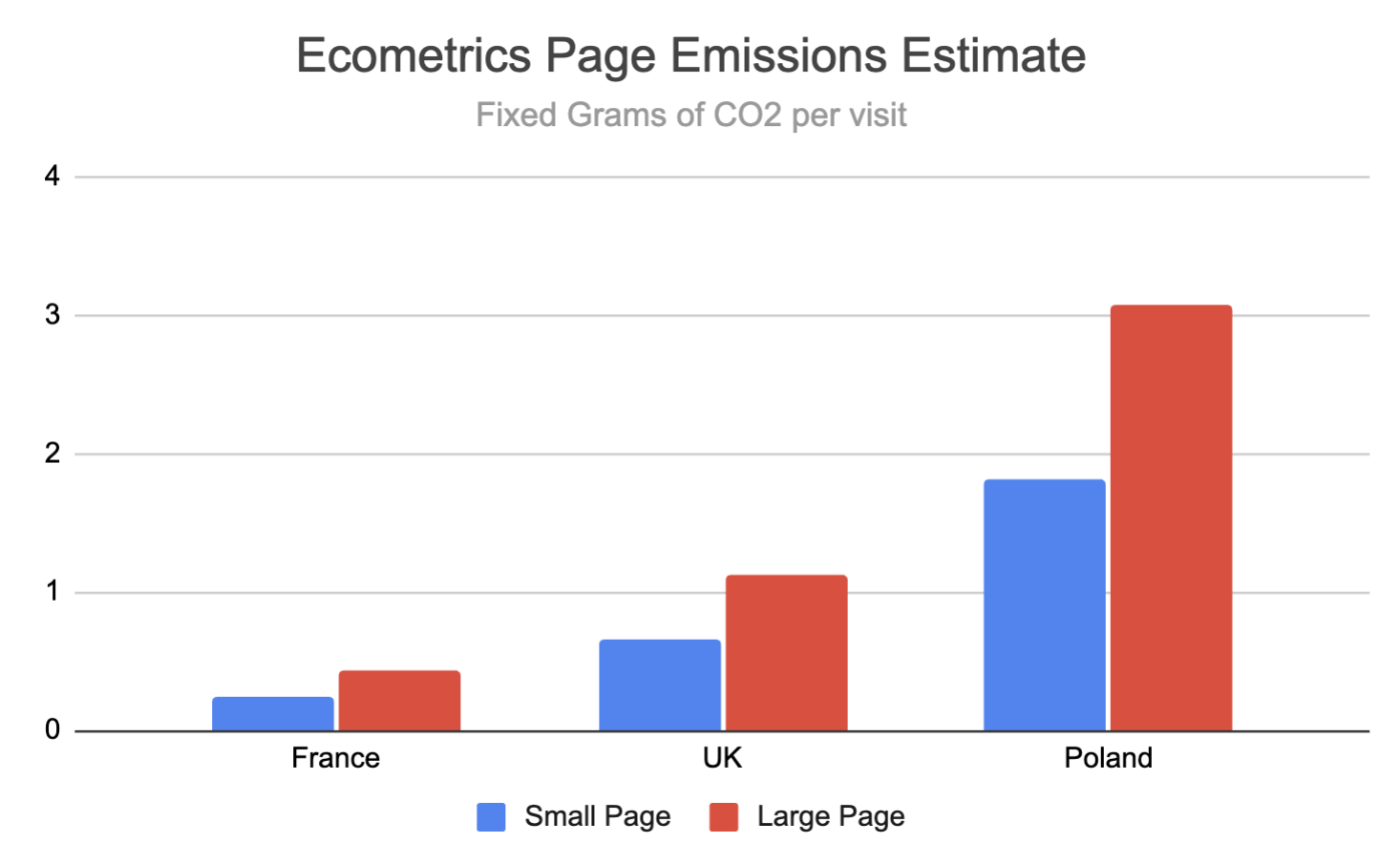
Where does the page weight value come from? When visiting a page for the first time, we can see that the plugin's request takes a lot longer than usual. This indicates that the page is being loaded on the server to calculate how much data is being transferred when opening it.

Is it a good estimate?
End user device emissions are a significant part of the overall emissions footprint of digital services. Taking this factor into account is useful.
However, there's still only a very indirect relationship between reported values and caused emissions. Companies need to be careful when reporting any claimed emissions reductions.