
Third-party scripts can have a major impact on performance. Consent Management Platforms (CMPs) are one of the most common types of third-parties used on websites, and how CMP providers implement these scripts can have a big impact on user experience.
In this post, we investigate interaction delays when accepting cookies, as measured by the Interaction to Next Paint (INP) metric. INP is one of the three Core Web Vitals, so a poor INP score can not only impact user experience but also website rankings.
About our analysis
We tested eleven of the most widely used CMPs, many of which we regularly see across the sites we monitor at DebugBear.
Since the scripts that run after interacting with the CMP can also affect INP, we looked at 5 websites for each platform and reported the median INP score, allowing for a fairer comparison of CMP performance.
The 11 CMPs we tested are:
- Cookiebot
- CookieYes
- Didomi
- Onetrust
- Osano
- Sourcepoint
- TrustArc
- Usercentrics
- Quantcast
- Termly
- Google Funding Choices
We tested each platform with the only user interaction being a click on the “Accept” button. As we run our tests on a fast desktop device, we enabled 4× CPU throttling in Chrome to get more realistic scores.
In addition to collecting quantitative data, we also looked for notable differences in how these platforms are implemented.
Our findings: ranking CMPs by performance impact
The INP performance chart below highlights a clear leader. Sourcepoint achieved the lowest median INP at 6 milliseconds, finishing 50 milliseconds ahead of Usercentrics in second place.
Google Funding Choices was significantly slower than the others, with a median INP score of 468 milliseconds. That's more than double the next slowest CMP, Osano, at 225 milliseconds.
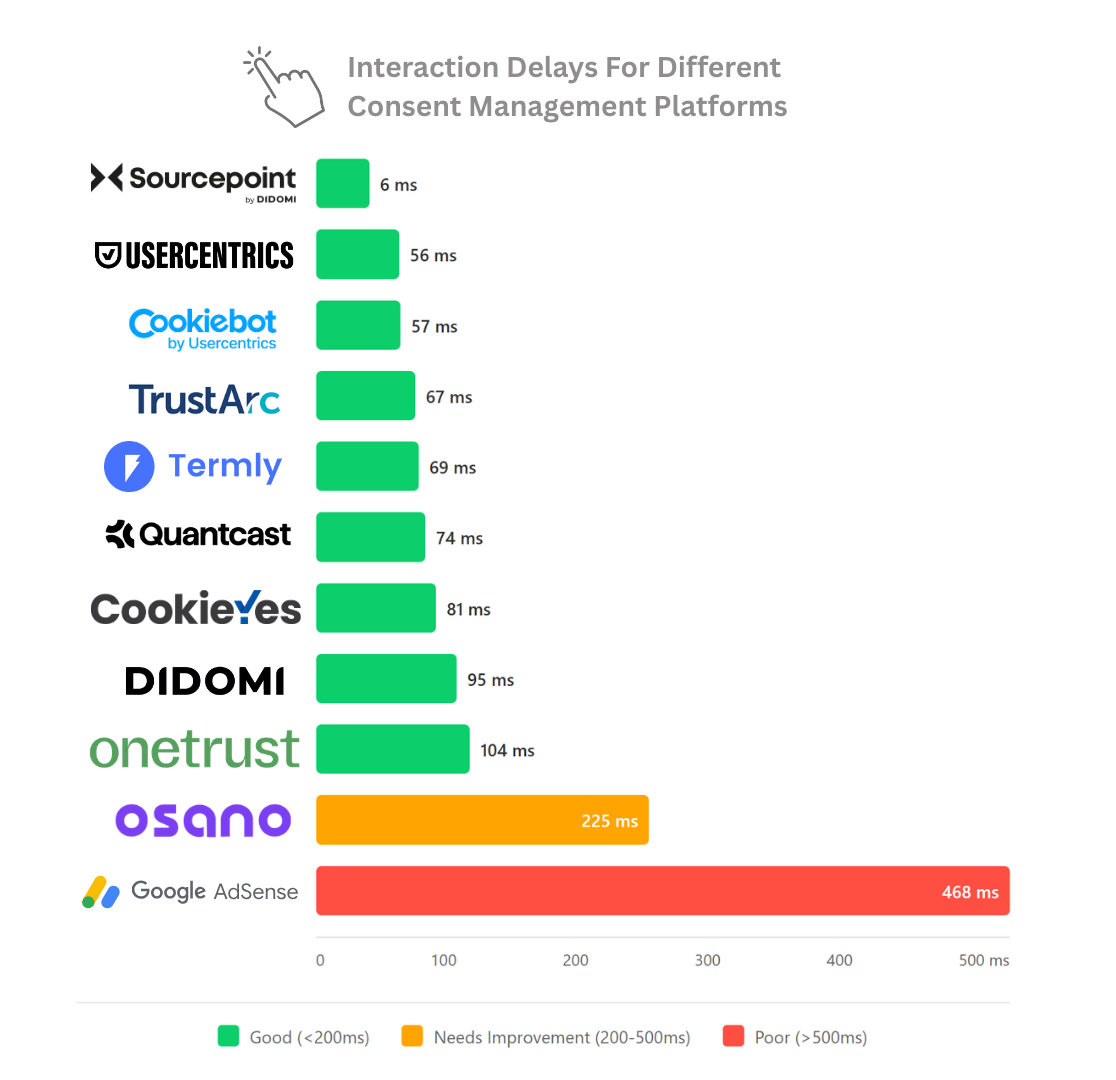
Keep in mind that these results just provide a rough idea of how different CMPs perform. For a specific visitor experience, it will depend on the visitor's device and how the CMP is configured on that particular website.
Why is Sourcepoint so fast?
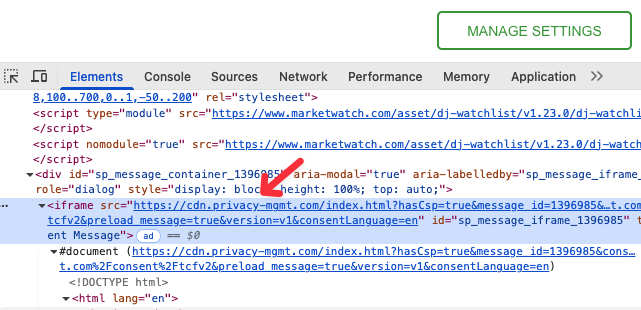
Compared to other platforms, Sourcepoint consistently showed a much lower INP score. This performance advantage is largely due to the INP content being shown in an iframe, where the consent modal and interaction handling are isolated from the main page.
Because the click is processed inside an iframe, main thread blocking is avoided, resulting in immediate visual feedback for the user. With the exception of one outlier result from TrustArc, iframe-based CMPs tend to handle the first interaction quickly, resulting in fast scores under 10 milliseconds. The majority of CMPs don't use an iframe implementation, but rather display the consent UI in the main website frame.
What causes a slow interaction?
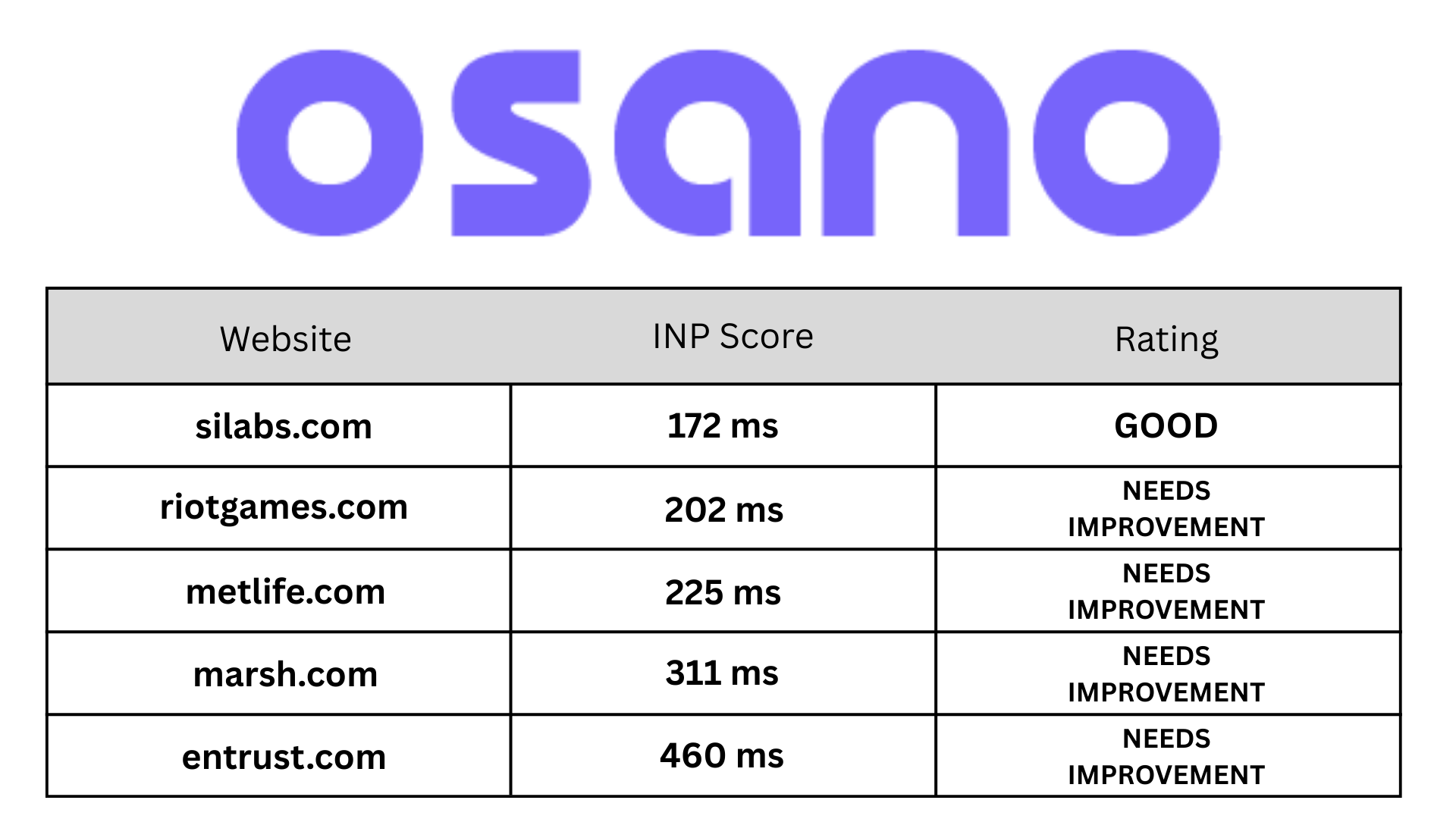
Excluding Google Funding Choices, Osano is the worst performing CMP by a considerable margin and its interaction handling consistently results in long main thread tasks. Across the tested sites, Osano's median INP is 130 milliseconds slower than Didomi, which places 8th overall. Only one Osano website tested fell in the "good" range where INP is below 200 milliseconds.
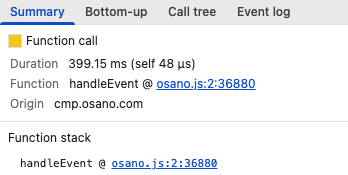
When manually testing the worst performing website from Osano with the Chrome DevTools performance profiler, we can see why this CMP performed so poorly. The CPU trace shows 448 milliseconds of processing time blocking the main thread. That mostly consists of JavaScript rendering logic as well as a forced reflow.
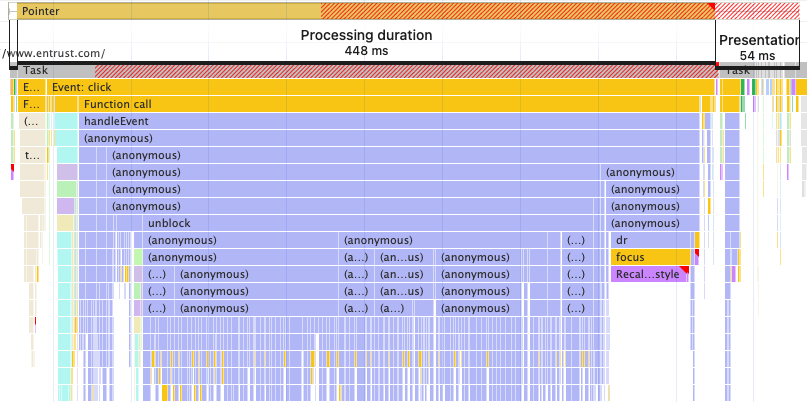
Combined with the 54-millisecond presentation delay and some input delay, this creates a total INP score of 508 milliseconds. That means a good interaction response is out of reach.
Individual CMP analysis
Below is a closer look at how each CMP performed in our testing.
Cookiebot
Cookiebot is one of the most widely used CMPs on the market. With pricing tiers starting at $7 per month, Cookiebot is among the more cost-effective options.
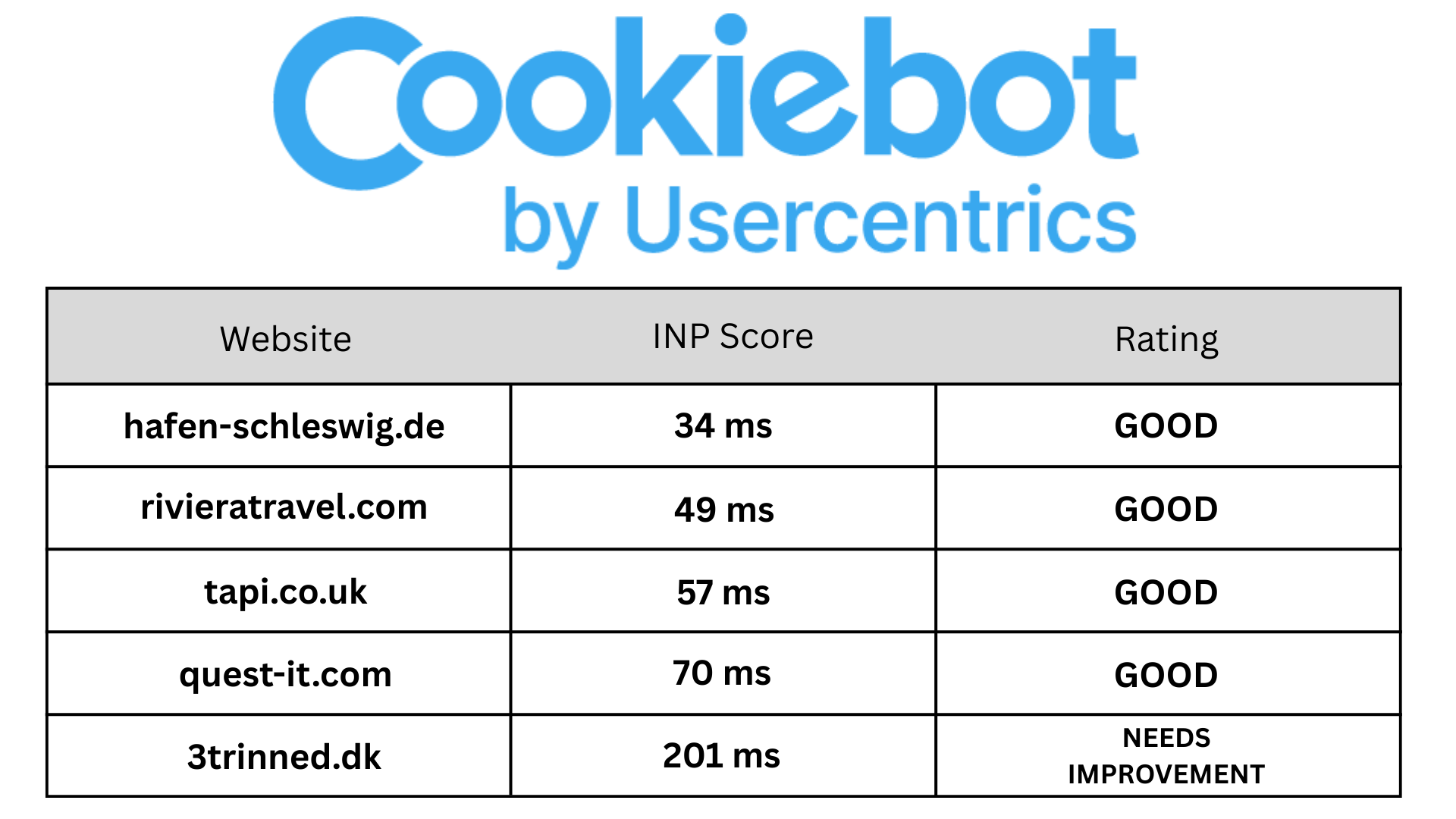
Our results mostly show strong performance: Cookiebot achieved a median INP of 57 milliseconds. Nearly all results fell below 100 milliseconds, except for one outlier landing in the "needs improvement" range at over 200 milliseconds.
Cookiebot was recently acquired by Usercentrics, another CMP included in this analysis.
CookieYes
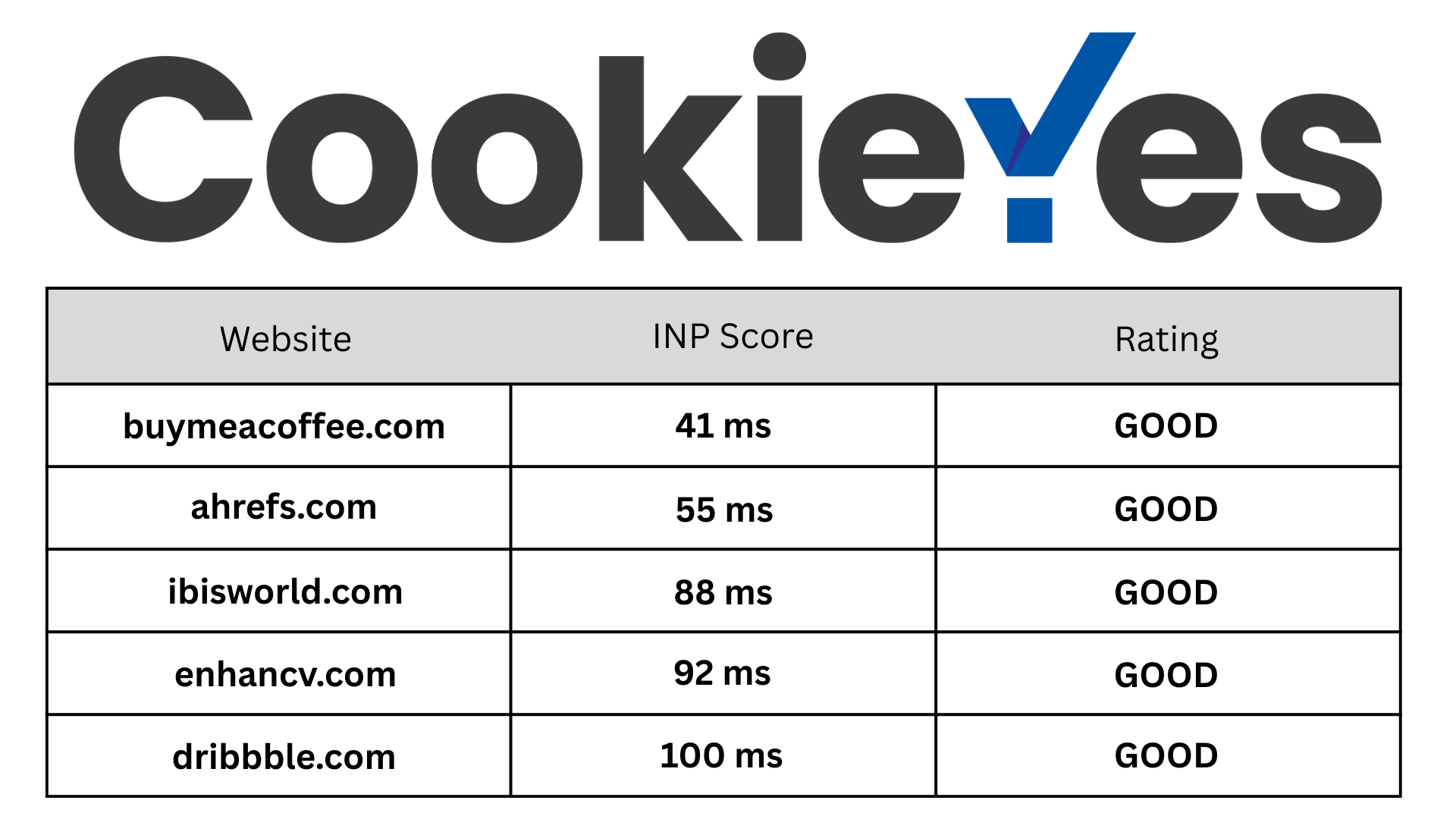
CookieYes is another CMP with a self-service option, as well as a free tier. While CookieYes recorded a higher median INP of 81 milliseconds, every site tested still scored in the “good” range, remaining under or at 100 milliseconds.
Didomi
Didomi is the first enterprise-focused CMP in our test, marketing itself on improving consent rates.
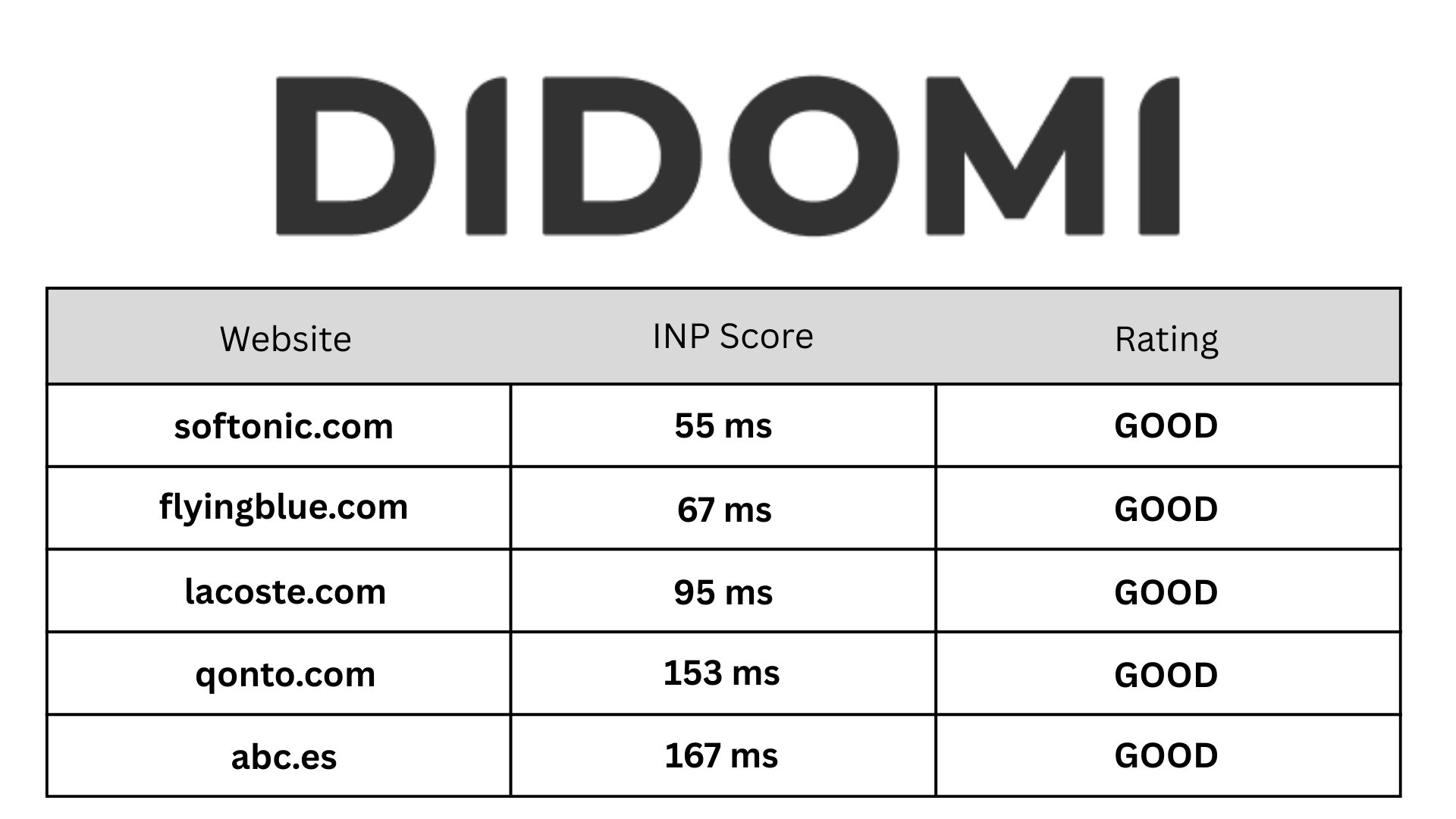
The product delivered solid INP results. The fastest result came from softonic.com at 55 milliseconds, with a median INP score of 95 milliseconds across the Didomi sites tested.
OneTrust
Like Didomi, OneTrust is another enterprise-focused CMP, supporting both web and mobile applications.
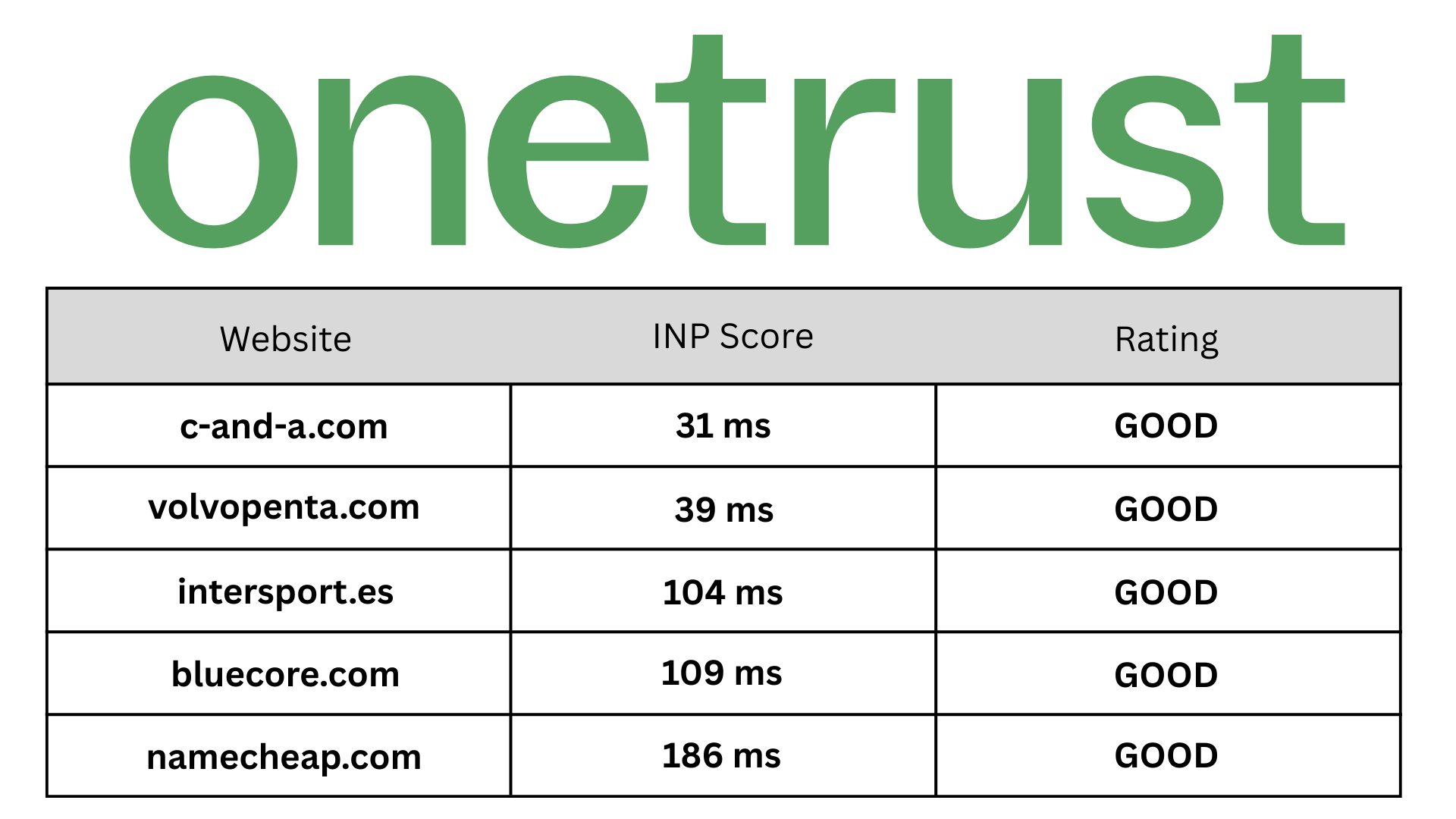
The median INP score was slightly higher than Didomi's at 104 milliseconds. However, two sites in the OneTrust group, c-and-a.com and volvopenta.com, posted standout results of 31 milliseconds and 39 milliseconds respectively, outperforming all five of the Didomi sites we tested.
Osano
Osano is another CMP focused on enterprise compliance.
In our test, Osano had a median INP score of 225 milliseconds, making it the second slowest CMP in our analysis. Only one site, silabs.com, fell within the "good" range at 172 milliseconds, while the remaining four sites landed in "needs improvement".
Entrust.com recorded an INP of 460 milliseconds among the Osano sites we tested. Entrust's current CrUX INP score also sits in the “needs improvement” range, aligning with our findings.
Sourcepoint
Sourcepoint also targets the higher end of the market, with plans starting at $500.
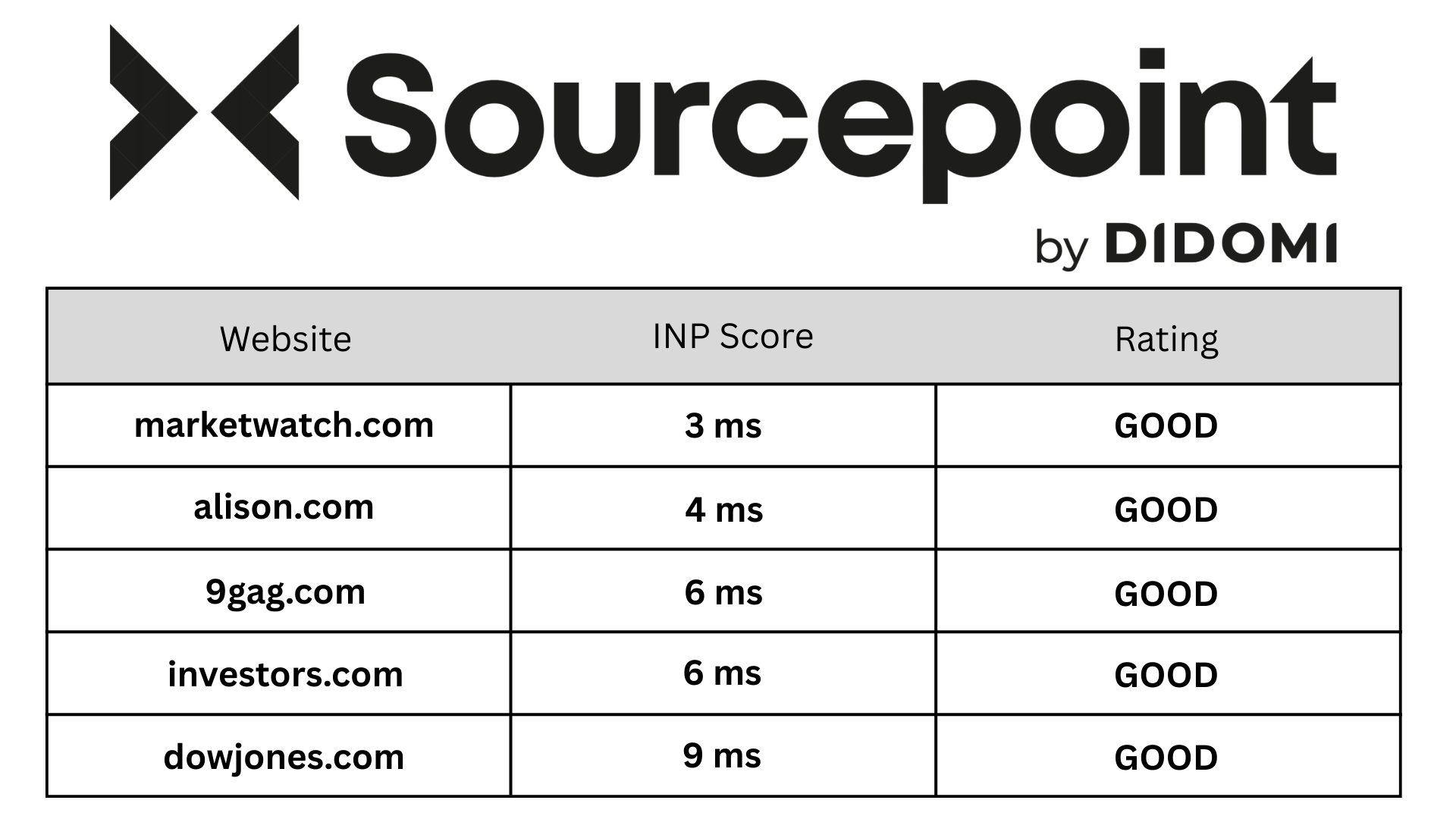
In our test, it delivered outstanding performance results, recording a median INP score of just 6 milliseconds, with the fastest result coming from marketwatch.com at 3 milliseconds and the slowest from dowjones.com at 9 milliseconds.
All tested sites implemented the consent banner within an iframe, resulting in a significant performance advantage over banners rendered directly in the main frame.
Although Sourcepoint is owned by Didomi, the two platforms differ in both pricing and implementation. Didomi scored a higher median INP score of 95 milliseconds, with DOM implementation and cheaper pricing.
TrustArc
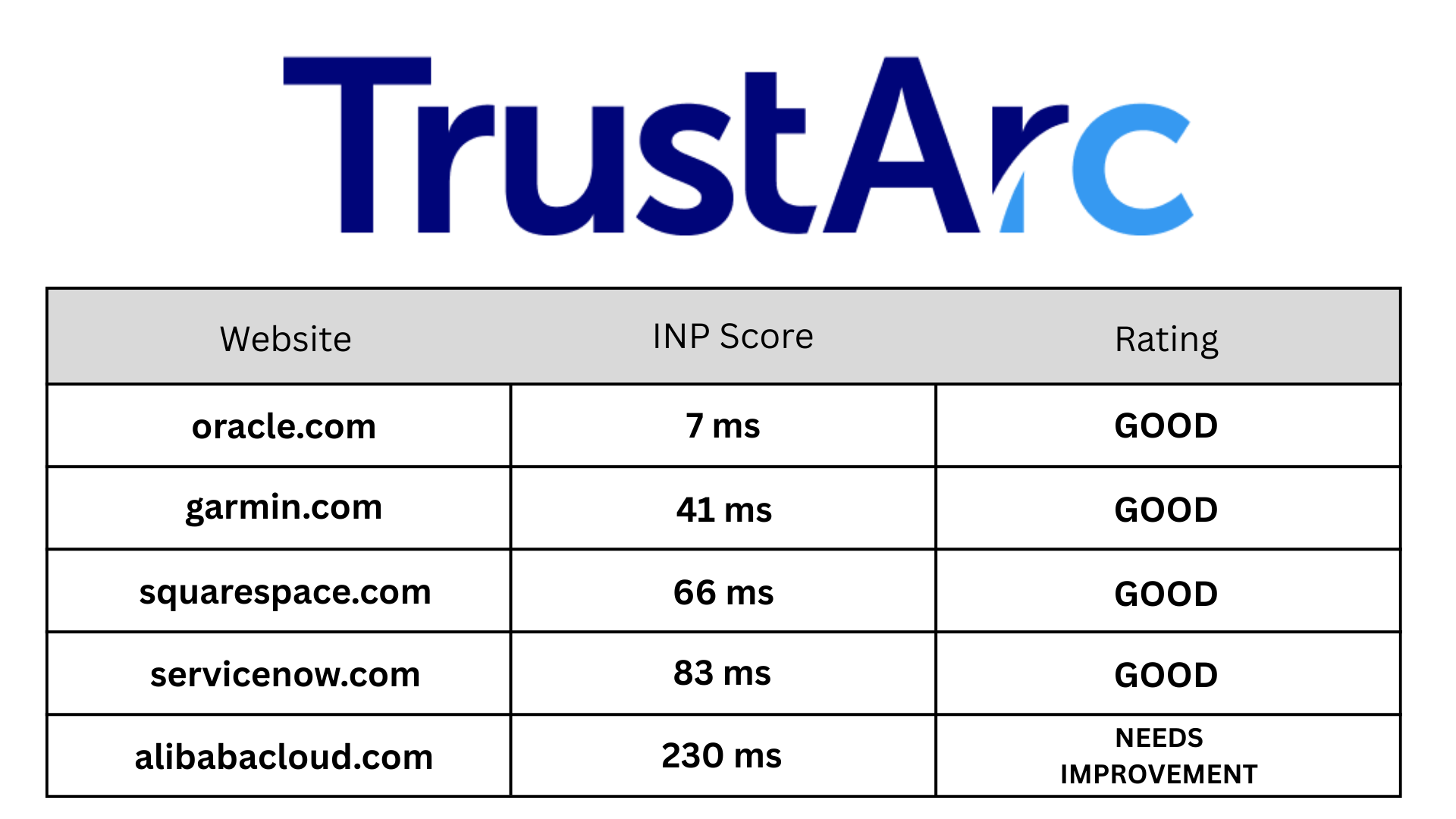
TrustArc is one of the more widely used CMPs, with a median INP score of 67 milliseconds. What stands out in these results is the variation in implementation approaches. The best performing site was oracle.com, which achieved an INP of 7 milliseconds using an iframe-based banner. This result is consistent with the Sourcepoint results.
Servicenow.com was the only other site using an iframe and recorded an INP of 83 milliseconds. While still within the "good" range, this result is noticeably worse than all other iframe-based banners tested.
Usercentrics
Usercentrics is a widely used CMP, with plans starting from $7 per month. As mentioned earlier, Usercentrics recently acquired Cookiebot, with “powered by Usercentrics” branding now visible on Cookiebot consent banners.
Cookiebot recorded a median INP score of 57 milliseconds, with four of the tested sites scoring under 70 milliseconds and one clear outlier just above 200 milliseconds.
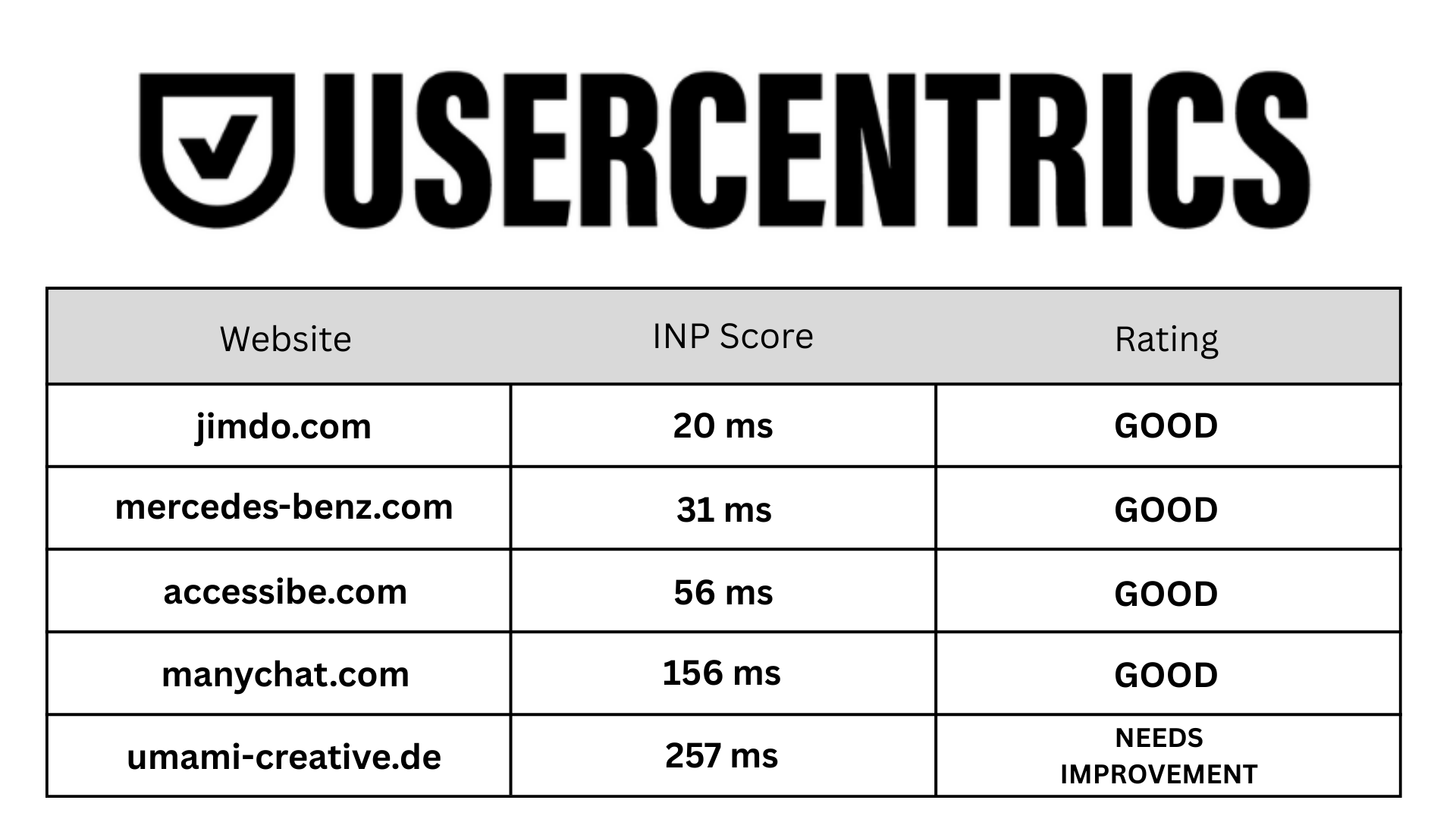
Usercentrics' results were mixed, but showed a better overall median INP score of 56 milliseconds. Jimdo.com and mercedes-benz.com scored 20 milliseconds and 31 milliseconds respectively, whereas manychat.com and umami-creative.de posted significantly slower results, contributing to the spread in scores.
Quantcast
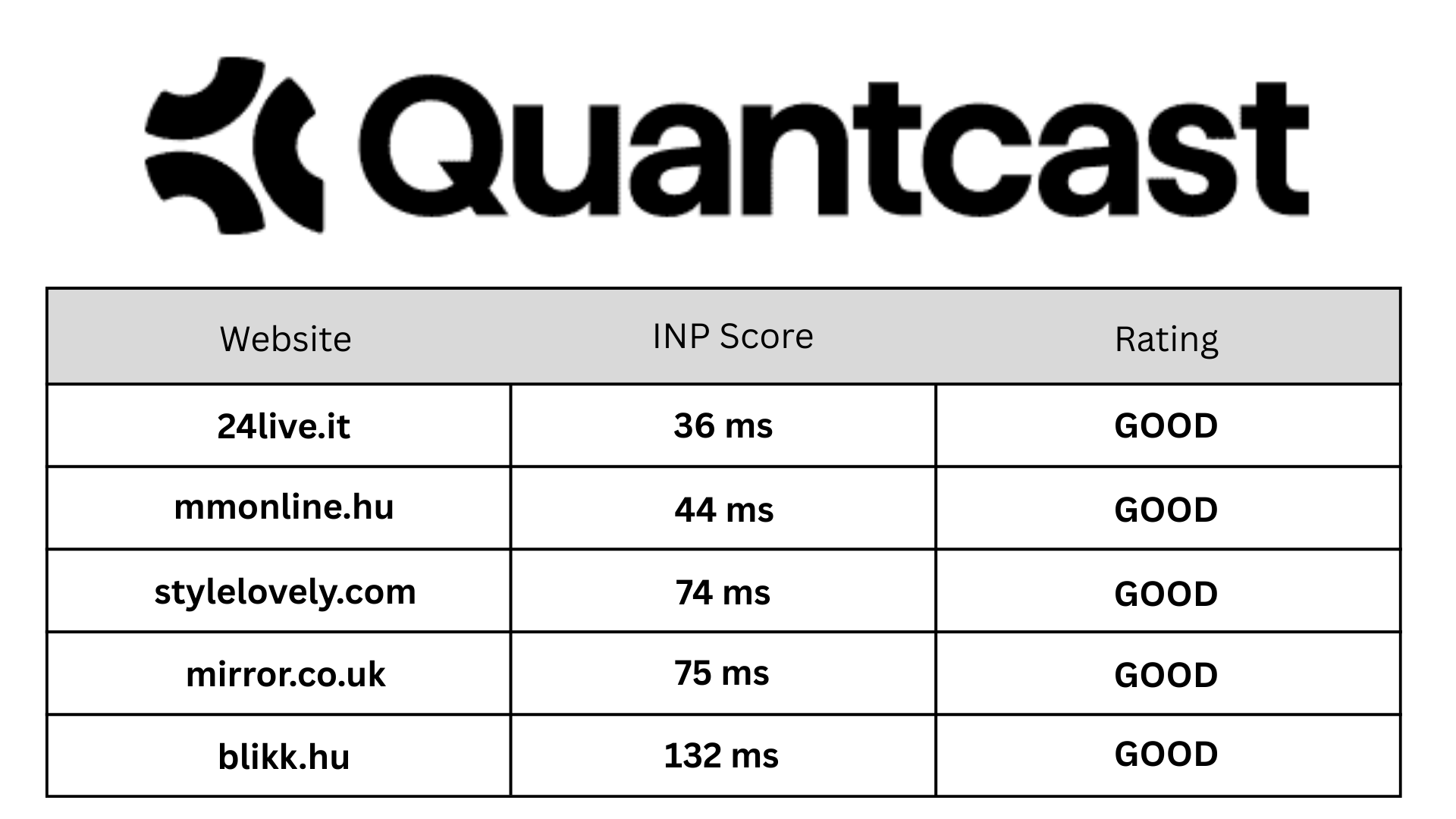
Quantcast Choice was a CMP provider that was acquired by InMobi in 2023. In our test, the median INP score was 74 milliseconds, with the fastest result recorded by 24live.it at 36 milliseconds.
Termly
Termly is a privacy-focused CMP with a free tier available, making it accessible for smaller websites.
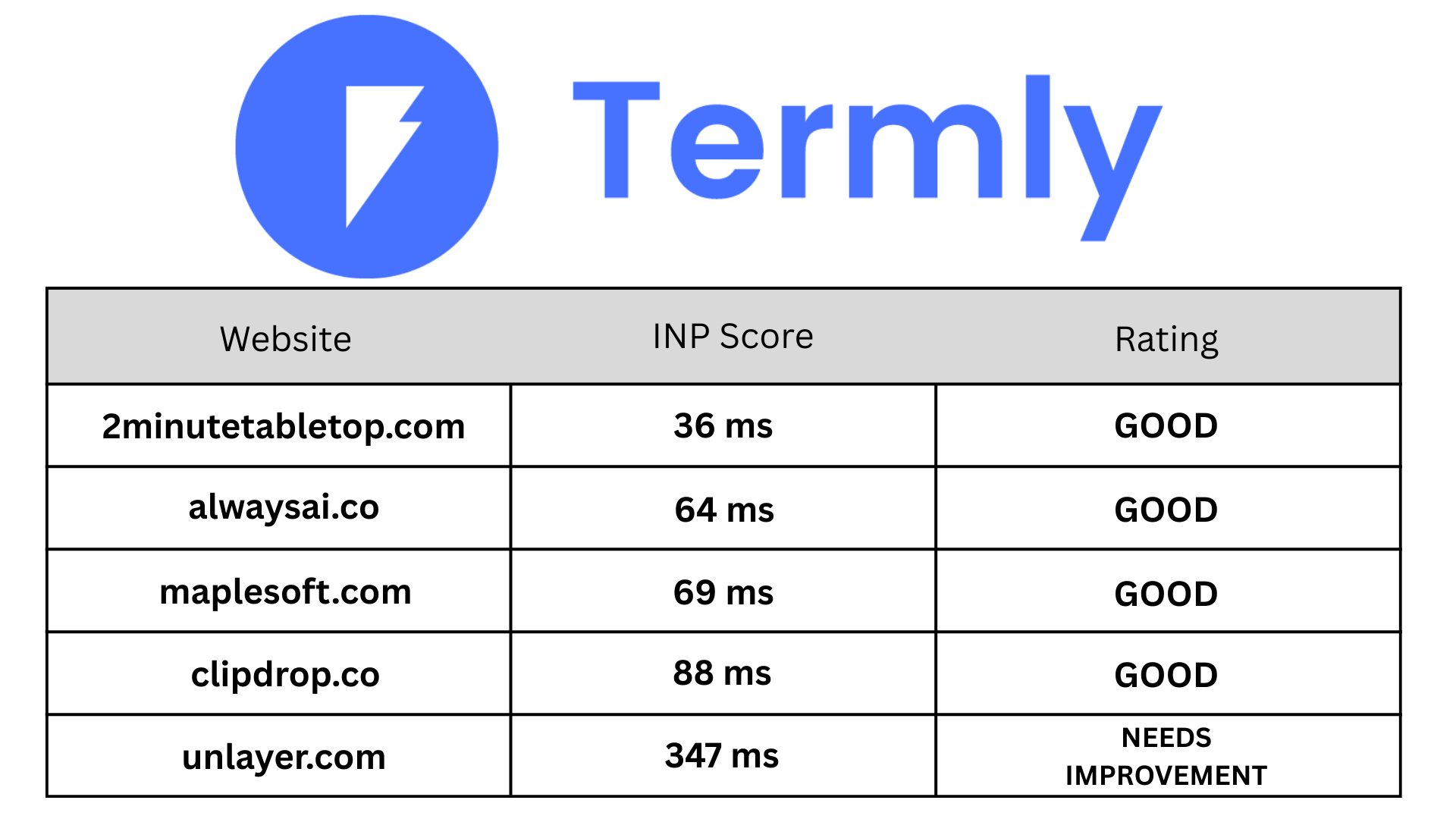
In our test, Termly achieved a median INP score of 69 milliseconds, placing it in 5th position overall. Four of the five tested sites scored in the "good" range, with unlayer.com being the exception at 347 milliseconds.
Google Funding Choices
Google Funding Choices is Google's CMP solution, commonly used by publishers monetizing with Google AdSense and Ad Manager.
In our test, Google Funding Choices was the worst performing CMP among the eleven platforms tested, with a median INP score of 468 milliseconds. None of the tested sites achieved a "good" INP score, with asahi.com recording the slowest result at 1,549 milliseconds.
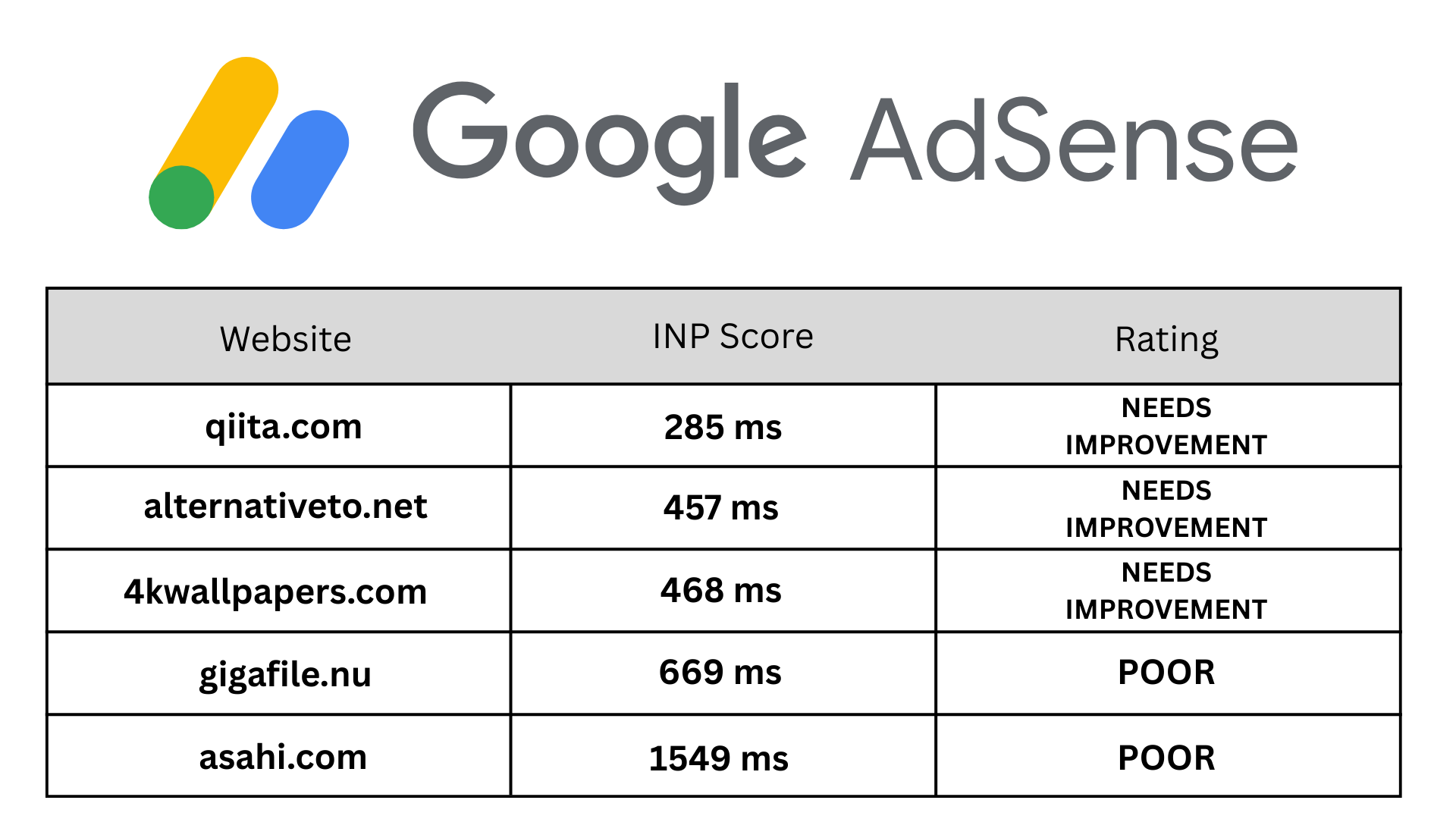
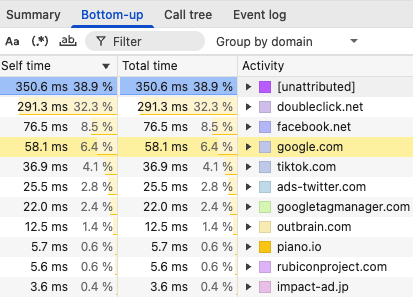
The poor INP scores from gigafile.nu and asahi.com are connected to Google conversion scripts which block the main thread.
Measure CMP performance on your own website
DebugBear Real User Monitoring (RUM) allows you to see the impact that CMP banners have on your website. Track Core Web Vitals metrics and find out how to optimize them.
After installing the analytics snippet on your website, you can see a full analysis of real-world slow interactions for consent banners, including individual page views showing the INP component breakdown and LoAF data.
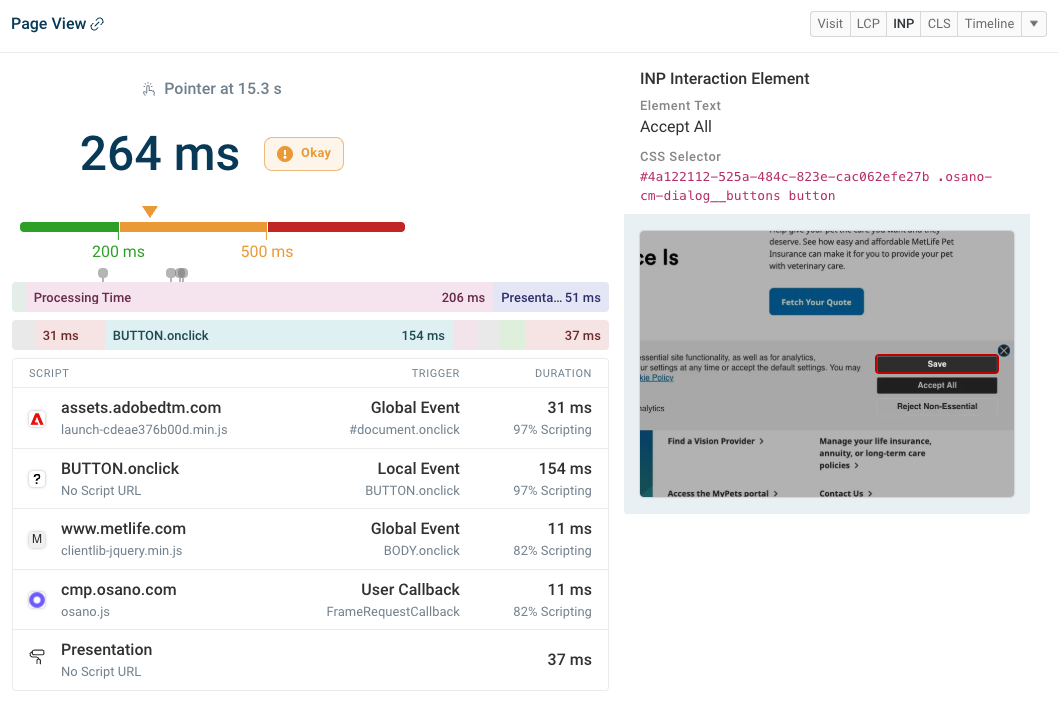
You can also view which scripts are impacting INP scores across your website, and whether background tasks or presentation delays are impacting your overall scores.
DebugBear also helps you stay on top of your web performance long term, with scheduled synthetic tests and instant alerts when there's a problem. Start a free 14-day trial today.
Monitor Page Speed & Core Web Vitals
DebugBear monitoring includes:
- In-depth Page Speed Reports
- Automated Recommendations
- Real User Analytics Data